
Glendalough history begins before the surviving buildings
Glendalough history begins with St. Kevin's early Christian community in the sixth century. The setting was an ice-shaped valley in County Wicklow, whose Irish name, Gleann dá Loch, means valley of the two lakes. The Glenealo and Glendasan flow through this landscape. The name places the settlement within the valley rather than describing only its churches or tower.
The buildings visible today do not all belong to Kevin's lifetime. Wooden churches from the founding period have not survived, and the settlement expanded in the eleventh century. That distinction changes how to read the site: its foundation and its standing architecture are different chapters of the same place. For a practical route among the monuments, use the monastic site guide.
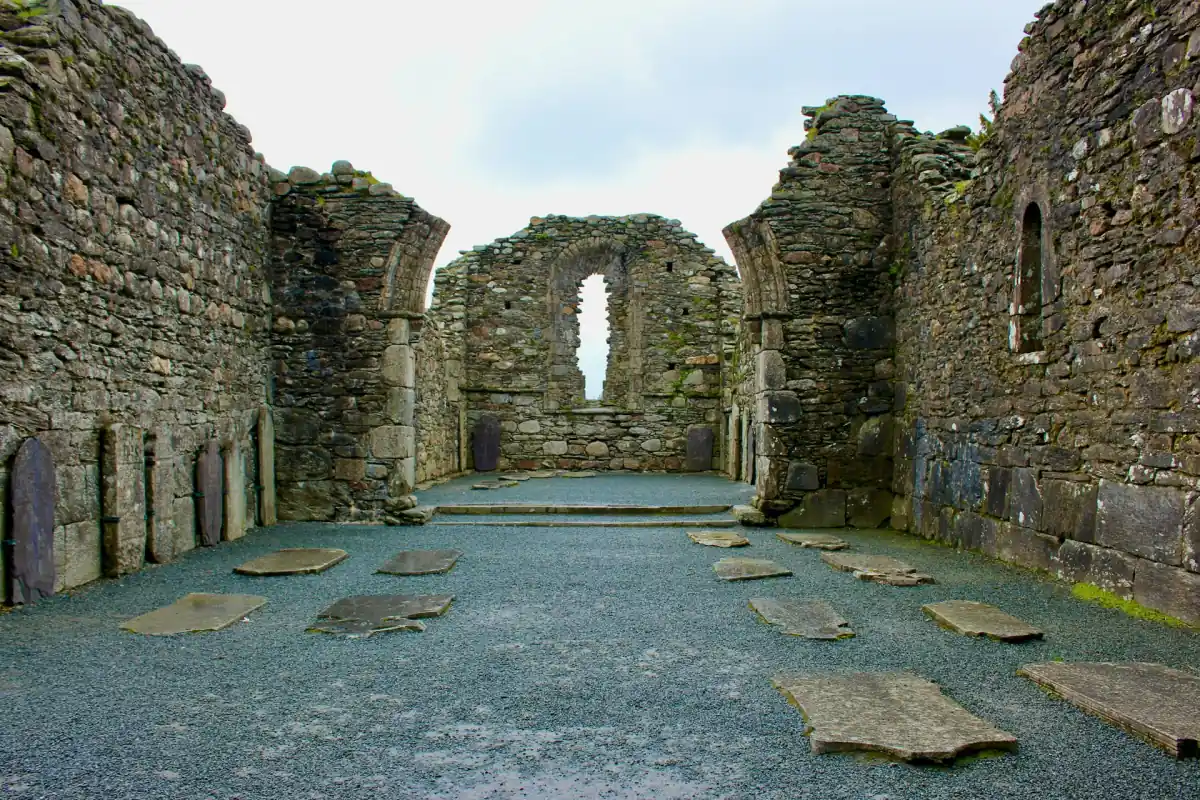
From wooden churches to a stone settlement
Separating the early community from the later stone buildings avoids imagining the whole surviving complex as a single founding project. The earliest wooden churches are gone. The eleventh-century expansion and subsequent church building give the visible remains their own chronology, extending well beyond the initial community.
Think of the architecture as evidence of development over time. The cathedral's later additions, the round tower's date and St. Kevin's Church each contribute to that sequence. A building associated with Kevin by name is not necessarily a building he used. This is especially useful when comparing the small stone church with the larger cathedral: their roles in the landscape do not require them to share one construction date.
The OPW visitor centre provides a separate indoor introduction to the monastic settlement. Its admission is distinct from the free outdoor ruins. That gives visitors a choice between adding interpretation indoors and approaching the surviving buildings directly, with the chronology in mind.
Our pick: a guided monastic walk
This Dublin day trip includes a guided walk through the monastic site.
Hand-picked tours, booked through Viator. Prices are indicative starting prices in euros (as of October 2026). Tap a tour for live availability and the current price in your currency.
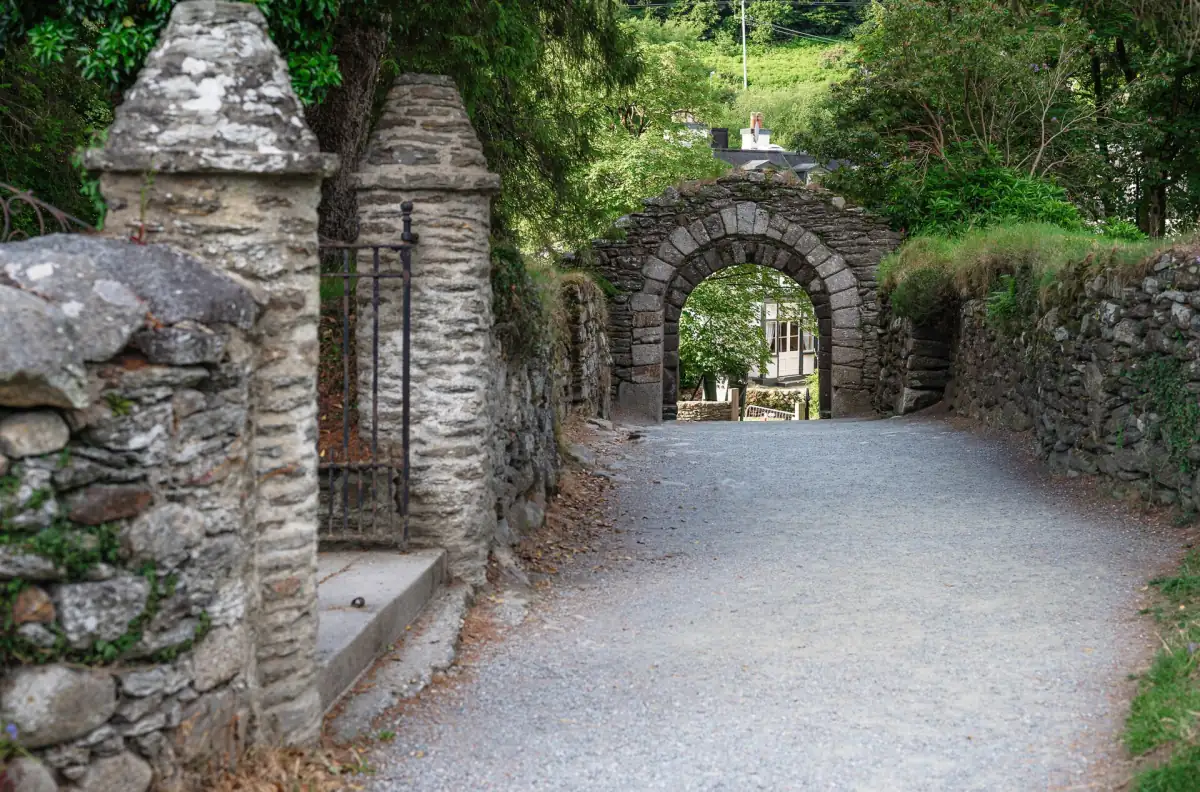
A guided monastic walk within a Dublin day trip
A guide explains Glendalough's monastic site on this Dublin excursion, which also includes Kilkenny walking time and a sheepdog demonstration. The Wicklow Gap photo stop is weather permitting.
The round tower: bell, storage and refuge
The round tower is about 30 m high, with its entrance about 3.5 m above the ground. It originally contained six wooden floors. OPW's historical educational material places it in the early twelfth century, making it part of the later stone settlement rather than a surviving structure from the foundation in Kevin's time.
Its primary function was as a bell tower; at times it also served for storage and refuge. Keep those functions together when interpreting it. Describing the tower only as a defensive structure would lose its main religious purpose, while describing only the bell would leave out its other uses. The raised entrance and former internal floors help explain its form without turning it into a visitor climb.
The cathedral and St. Kevin’s Kitchen
The cathedral, dedicated to St. Peter and St. Paul, is the largest church in the settlement. It was built in phases: the chancel belongs to the late twelfth century and the sacristy to the early thirteenth. These additions are a useful reminder that a historic church can represent several building campaigns rather than one completed design.
St. Kevin's Church is also called St. Kevin's Kitchen. OPW dates it tentatively to around 1100 and describes its stone roof and bell tower. The kitchen nickname comes from the chimney-like appearance of that tower, not from evidence that the building was used for cooking. Read it as a church, and the name becomes an explanation of its silhouette rather than its purpose.
Together, the cathedral and smaller church make the site's layered chronology visible. A large multi-phase church and a compact stone-roofed building offer different architectural forms within the same monastic landscape. Neither should be treated as an unchanged original building of the sixth-century founder.
St. Kevin and the place of legend
OPW's educational material presents Kevin's animal stories as myths and legends. They belong to the traditions associated with the saint, rather than acting as dated accounts of events. His feast day is 3 June. It is possible to appreciate the stories while keeping them separate from the construction sequence of the surviving buildings.
This distinction makes the history easier to follow. The founding community, later architectural phases and stories of the saint answer different questions: how religious life began here, how the stone settlement developed, and how Kevin was remembered. Leave room for all three without using a legend to assign an exact date to a building or to reconstruct the founder's daily life.
Mining remains beyond the monastic story
The Miners’ Village remains add another layer to the valley's visible past. Miners’ Road is an out-and-back walking route, and underground mines are inaccessible. For the distance, grade and route restrictions, use the walking guide instead of treating the remains as part of a short monastery circuit.
If you want historical explanation with transport from Dublin, the excursion featured here includes a guided monastic walk, an expert guide and a separate driver. The monastery visit is one part of that wider day. For choosing between transport formats rather than following the site's chronology, see Glendalough day trips.
History questions
When was Glendalough founded?
St. Kevin established an early Christian monastic community here in the sixth century. The surviving stone buildings belong to later phases.
What does Glendalough mean?
Gleann dá Loch means valley of the two lakes, linking the name to the surrounding landscape.
Was St. Kevin’s Kitchen a kitchen?
It is a church. Its nickname refers to the chimney-like shape of the bell tower rather than a cooking function.
Why was the round tower built?
It functioned primarily as a bell tower and was also used at times for storage and refuge. It originally had six wooden floors.